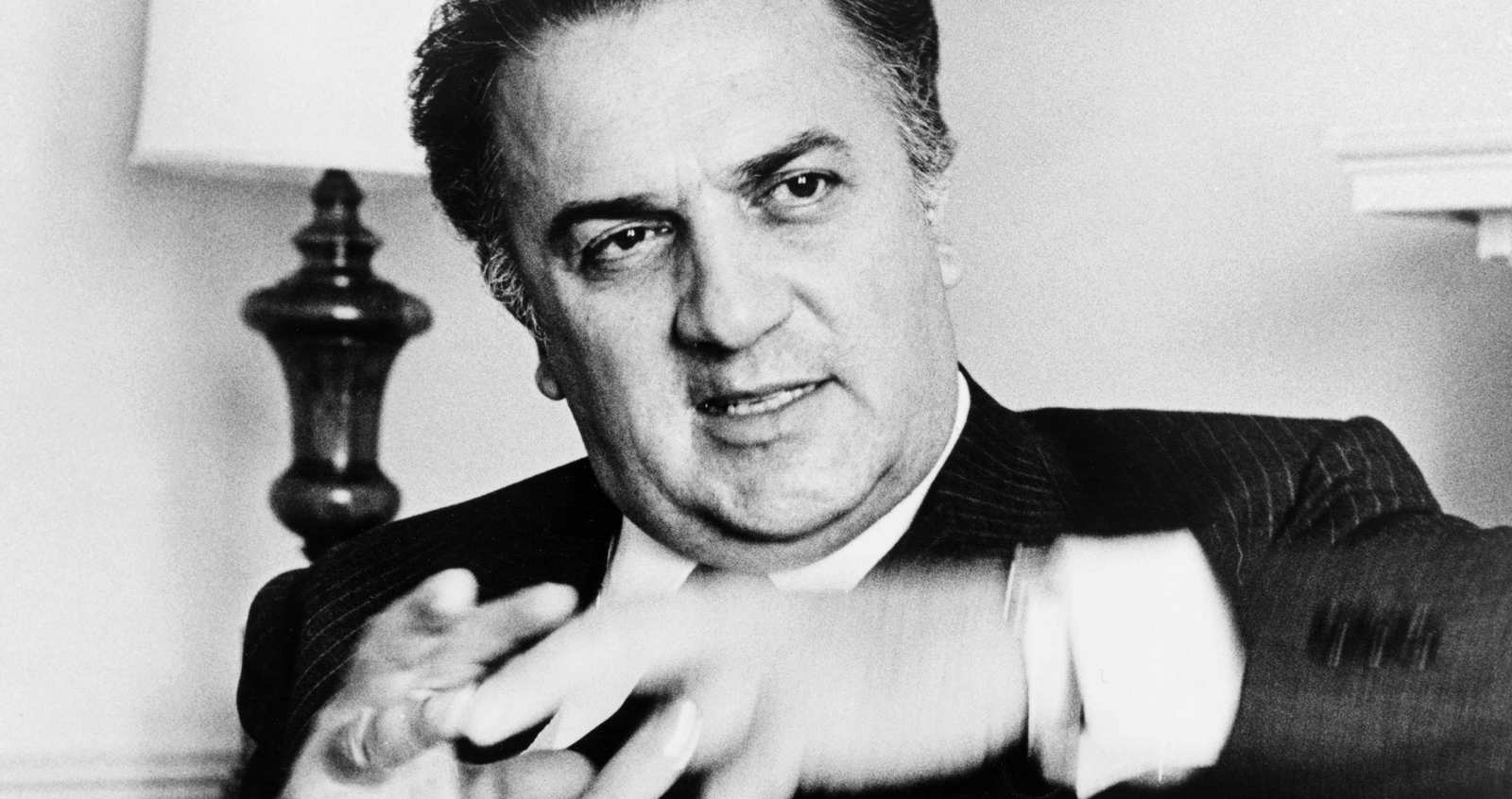
he used marker and watercolor to draw himself, often small in a corner, alongside enormous women, popes, tigers, collapsing theaters, and flying machines. he dated and captioned each page in his own hand. he worked in the morning while the images were still clear.
the dreams went into the notebooks, and the notebooks went into the films.
the notebooks fed films such as 8½, juliet of the spirits, and city of women. their processions, seductions, and floating figures move from the pages to the screen. fellini said dreams supplied his imagery. after his death, the notebooks appeared as the four-hundred-page il libro dei sogni.
this was not one lucky night. fellini returned to the practice for thirty years. the primary source is not a later anecdote. it is the dated object in his own hand. the notebooks show how repeated recall can build a deep source of creative material.