01the contest
mary had no story. for days, she gave the same answer when the group asked about her idea: no. one night, they discussed galvanism and whether dead tissue could return to life. she went to bed with that question still active in her mind.
02the pillow
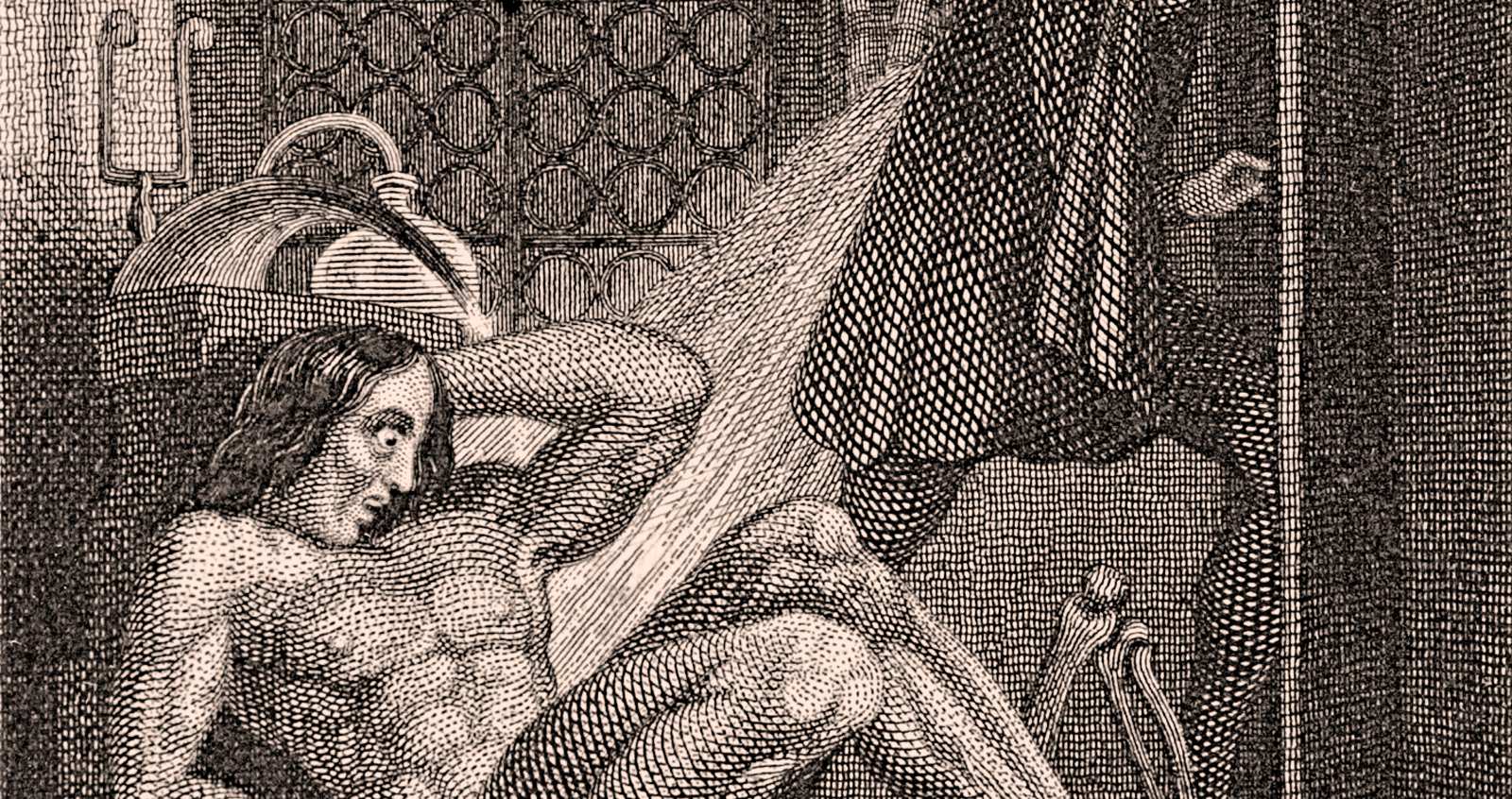
shelley described what came next as a waking dream rather than normal sleep. with her eyes shut, she saw a student kneeling beside the being he had assembled. then the being began to move.
i saw — with shut eyes, but acute mental vision — i saw the pale student of unhallowed arts kneeling beside the thing he had put together.
she opened her eyes in fear, but the image stayed. then she understood how to use it: what frightened her could frighten a reader. she had found the story she could not produce during the day. in her later account, the answer came “swift as light.”
03the book
frankenstein was published two years later. the student, the assembled being, and its first movement remain central to the novel. shelley recorded the origin herself fifteen years later in the 1831 introduction. her account names the pillow, her shut eyes, and the state between waking and sleep.
04the echo
the laboratory, lightning, and “it’s alive!” line come from the 1931 film, not the novel. however, the film still stages shelley’s core image: a student watches the being he built begin to move. more than a century later, her waking dream remains visible inside the adaptation.

shelley did not force the scene to appear. she carried a difficult question from the evening into bed. later laboratory research would study the same broad pattern: evening material can continue into sleep. the waking dream gave her question a visible form she could use.